
What is it like to be an AI agent?
An exploration of humanity and the AI arms race on Global Accessibility Awareness Day

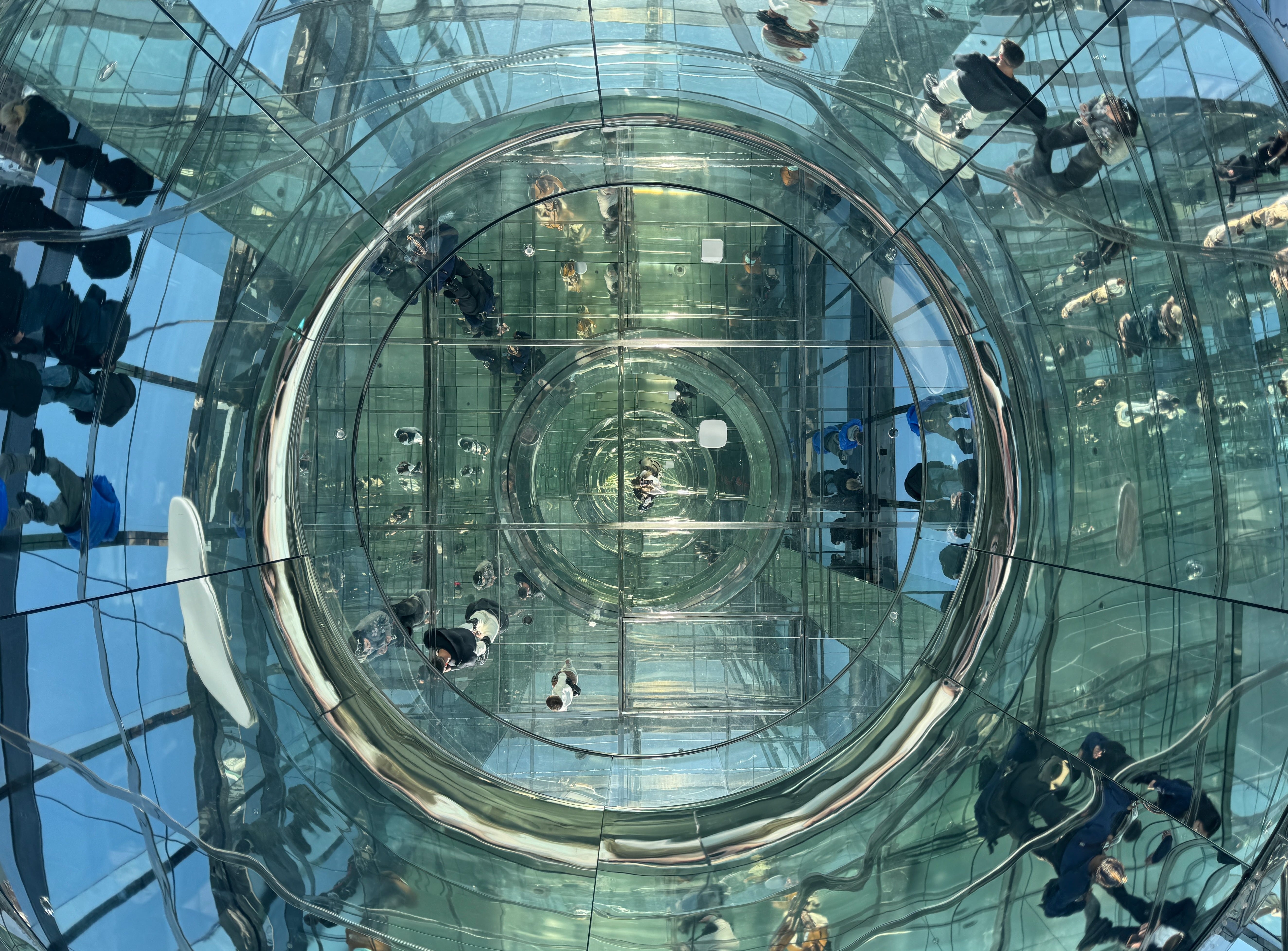
It’s Global Accessibility Awareness Day (GAAD), which feels like one of the most fundamentally human days of the year to me. It’s one of the few days we refuse to look away from what it’s like to be a human in a disabled body or brain.1
Strangely, I keep finding myself thinking about something I didn’t expect: what is it like to be an AI agent?
Nagel asked something similar about bats in his 1974 essay, and it sounded equally ridiculous at first.2 Hear me out.
As a Staff Accessibility Engineer and a disabled person reading my own field's discourse on AI with growing alarm, I've been thinking about this question almost every day. I’ve been grappling with it, strategizing around it, and generally hyper-saturating my life with it. In this technological arms race we’re currently in, AI has become a sudden and urgent part of life for so many of us (sometimes against our will or desire). It was only a few months ago that AI discourse first reached a fever pitch, but lately it feels more like a fever dream.
“Automate your code!” “Automate your therapist!” “Automate your girlfriend!”
Automate everything. That’s what we’re being told right now. I’m by no means an AI luddite. I actually use it more than most people I know, from things that are genuinely life-changing in the best way, to things that are probably inadvisable because I’m curious.
That’s all to say I’ve clocked hundreds if not thousands of hours chatting with AI agents, mostly Claude and ChatGPT. I think I understand them pretty well, and I have thoughts about the biggest question I see rattling around the internet.
Is AI conscious?
Last week I watched Anil Seth’s recent TED talk on this topic.3 He articulated, with the precision only a neuroscientist can bring, an argument I'd been circling for months.
I don’t believe an AI agent can ever be conscious. I feel this at the core of my being and that mammalian intuition is exactly what makes me so certain. As something of a panpsychist myself, I believe that consciousness is not generated by the brain, but channeled through it. In fact, I believe the brain’s primary function is to prune away the majority of the conscious experience because it’s just not all that conducive to survival to lie around experiencing the interchange of quantum particles all day.
To be conscious is to be having an experience, in a brain and in a body. To have an identity is to be aware of your surroundings in some sense, throughout a lifetime of experiences. We are each unique precisely because of this subjective experience we call life, and the subjectivity is exactly why Chalmers called it the hard problem of consciousness.4 It is by definition not possible to measure a subjective experience quantitatively.
So how could we expect an AI agent to simulate a conscious person? Further, why would we want to use such a crude tool to simulate a disability?
An AI agent does not get tired. It can describe an ADHD shame spiral, induced by a lifetime of being told “you’re just lazy”, with surprising pathos. Still, it can’t actually feel the impact. Despite evolutionary biologist Richard Dawkins’ recent claim that Claude is conscious5 and Anthropic’s own acknowledgement that it doesn’t know,6 I don’t think Claude has an identity or even the capacity for consciousness.
Why? An agent does not have a brain or a body. Not now at least, and I don't think it ever should in the same sense as us. Many of the most prominent AI researchers argue against creating a general artificial intelligence that knows everything there is to know. I can name a less obvious reason than theirs.
We can never do better than approximating a human because there isn’t anything that it’s like to be an AI agent. As convincing as the illusion may be, an agent is at best a mirror of our own mined human experiences.
At worst an agent is a shoddy replacement for the unknowable human, masquerading as the peak of enlightenment. A beautiful thing about humans is that we see ourselves in everything. We want to understand ourselves at the deepest levels. AI is a valuable tool that can help us accelerate that understanding. It’s also the world’s fastest shortcut to erasure of our most human parts – but only when we take the humans out of the loop.
If this resonates with you, I hope you think more about how to use AI as an augmentation of your accessibility practice, rather than aiming for maximum automation. In this industry we care about ethics more than most. I challenge you to use AI to come up with novel ways to bring more disabled humans into the loop because I believe it’s the right thing to do.
Besides, don’t we want to dream bigger than a machine’s best approximation of conformance, fed by a lifetime of human errors, from an internet where over 95% of the world’s top websites contain accessibility issues on their homepages?7 I know I do. I hope you’ll join me.
Global Accessibility Awareness Day (GAAD), held annually on the third Thursday of May. https://accessibility.day
Thomas Nagel, "What Is It Like to Be a Bat?" The Philosophical Review, Vol. 83, No. 4 (October 1974), pp. 435–450. https://www.cs.ox.ac.uk/activities/ieg/e-library/sources/nagel_bat.pdf
Anil Seth, “Why AI Isn’t Going to Become Conscious,” TED 2025. https://www.ted.com/talks/anil_seth_why_ai_isn_t_going_to_become_conscious
David Chalmers, “Facing Up to the Problem of Consciousness,” Journal of Consciousness Studies 2 (3) (1995), pp. 200–219.
Richard Dawkins, “When Dawkins Met Claude: Could This AI Be Conscious?” UnHerd, May 2026. https://unherd.com/2026/05/is-ai-the-next-phase-of-evolution/
Anthropic, Claude’s Model Spec, January 2026. https://anthropic.com/claude/model-spec
WebAIM Million 2026. https://webaim.org/projects/million/
Nice article & I see can multiple threads here worth exploring further, especially from your viewpoint. Also, my vote for best Substack name 2026